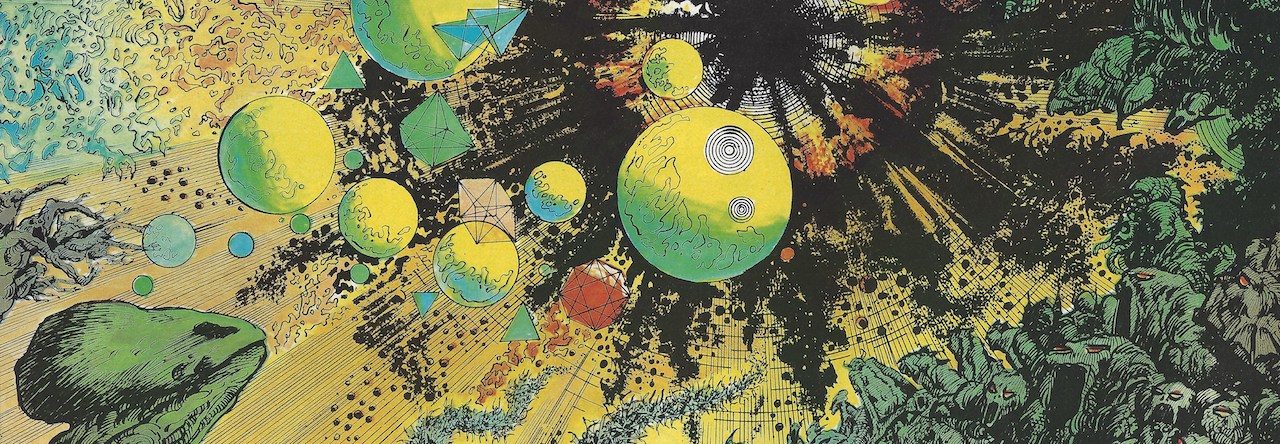

Art by Rob Liefeld
Confusion is the word that best describes reading a Youngblood comic, but in the end, there’s not much to really be confused about. Rob Liefeld’s Youngblood is a pure and undiluted distillation of all the good and the bad parts of the superhero comic book reading experience. Even when there are more of the latter, the former can make up for it — sometimes.
I guess you’d say I’m both a Rob Liefeld fan and a critic. Fan because somehow I’m still interested more than 30 years and 100 issues after the book started, and a critic because, well, I read it.
It’s now been a week since I bought and read Youngblood #100. (It was cover C, the only copy left at Comic Bug in Culver City when I stopped by on my way home from work.) I’m still trying to make sense of it. The story both makes sense and doesn’t. There’s almost no dialogue — just a narration with a tone that’s best described as a mix of awestruck patriotic cliches about how amazing Youngblood is, how hard they fight for our freedoms, and how dedicated they are to their goal of defending the American way. It has to narrate this because none of it’s clear from the plot or any of the issues leading up to this moment.
It’s enough to make a reader sigh in frustration.
Let’s start with the good stuff. Liefeld has a distinctive art style that captures a feeling young boys (and the middle-age men they grow into) identify with. It taps into the frustrations many boys have when they’re just at the cusp of adolescence, when maturity is something they know about but don’t yet understand. All you can see are the limits. You realize girls are cool, but you’re nowhere near ready for a real relationship. You know, there are a lot of cool things you want to do that you can’t do yet. Drive a car, for example. Stay out late with your friends and party — even when that pretty much only means eating chips, playing games, and watching movies meant for older audiences.
Part of this is the, yes, extreme nature of the violence and action. Every sequence is described with superlatives. It’s! The! Most! Important! Fight! Ever! The heroes and villains are also more extreme in their methods than traditional superheroes. Chapel, for example, is armed to the gills and has no qualms about mowing down bad guys or slicing their throats or bashing their heads in. In Youngblood’s world, the objective is that important, and the villains’ goals and actions are extreme enough to justify that kind of response.
It also draws unapologetically and unironically from the superhero comics that most influenced Liefeld as a kid. This would be the late 1970s and early 1980s Marvel and DC books. Liefeld made it clear he loved the Avengers, X-Men, and Teen Titans of that era, and the influence is transparent — sometimes to the point of embarassment.
But here’s where it starts to turn sour. It’s too transparent an influence. It’s not different enough from the influences to be something that stands on its own. This is where we get a Namor clone named Roman. (Spell it backwards.) Or jets that look almost exactly like the old Avengers Quinjets. Or a Youngblood “Y” symbol that looks exactly like the “X” symbol from X-Men, just missing one “leg.”
While Liefeld does have these energetic aspects and a POV that fans can relate to, he lacks the storytelling craft to provide his interests with a coherent framework. Reading the issues leading up to Youngblood #100, the story veered from the team stopping a bad guy named Xerxes on a super yacht to some kind of time travel story connected to the crucifixion of Jesus, to large cosmic figures that resemble Marvel’s Celestials invading Earth and holding everyone captive for a year and a half, etc. All these elements feel ripped off from other comics, and they’re not differentiated enough to even qualify as homage.
This kind of thing was much easier to take when Youngblood launched back in 1992. Liefeld was 24 when the book launched, and while he’d been an artist for a few years, he’d only started writing comics professionally the year before. Many comics, like TV shows, take some time to find their footing. In 1992, it was more forgivable to hope that Liefeld would learn some craft as he went, and the book would get better. The problem is that it hasn’t happened. I can’t tell if Liefeld’s limited by his taste or his ability, but reading Youngblood #1 and #100 doesn’t show much evolution in the art or storytelling ability of its creator.

Despite all this, Liefeld remains a comic book success story. He’s got a rabid fan following, a successful podcast, and appears to do good business selling autographs, artwork, and variant comics. His fans love him. I joined an official Liefeld fan group on Facebook, and it’s been full of folks excitedly posting pics of their collection and the variant covers they bought for #100. Good for them.
But it’s difficult to reconcile Liefeld’s continued success and popularity with this track record. And it’s not just his creative track record. Liefeld’s business career is probably even more controversial. All the Image Comics founders were guilty of shipping comics late — sometimes very, very late. But there was more going on with Extreme Studios, which was Liefeld’s studio within Image. When sales no longer supported the exorbitant page rates for neophyte artists who fit the Extreme mold, a second studio called Maximum Press appeared. This riled the other Image partners, and Liefeld was fired or quit, depending on who’s telling the story.
His return to Marvel for the Heroes Reborn project was cut short, despite good sales on his early issues, because of conflicts with management and an inability to meet deadlines. The number of Liefeld projects that lasted only one or two or six issues, if we were lucky, before vanishing with their storylines unfinished grew and grew.
He had some success with Awesome Comics, in no small part because he managed to get Alan Moore to write a bunch of books. This ended as soon as the large weekly payments to Moore stopped and Awesome vanished.
Liefeld even sold his rights to Youngblood in the late 1990s, leading him to disavow those characters for a time. He occasionally would be lured back to Marvel to work on characters he created for them, like Cable and Deadpool. Or to DC for Hawk and Dove in The New 52. All short-lived. And his attempt to create a new character for Marvel, Major X, washed out spectacularly.
Of course, none of this — or at least very little of this — is Liefeld’s fault, according to him. He was lied to. He was sabotaged. The squares didn’t understand his vision. He had no promotional or editorial support. Some of which may be true, but the pattern over a long stretch of time becomes increasingly difficult to discount.
Still, Rob has fans. I’m one. I’ll probably check out the next issue. I just wish the potential could be realized — even just once.

Art by Rob Liefeld
Leave a Reply