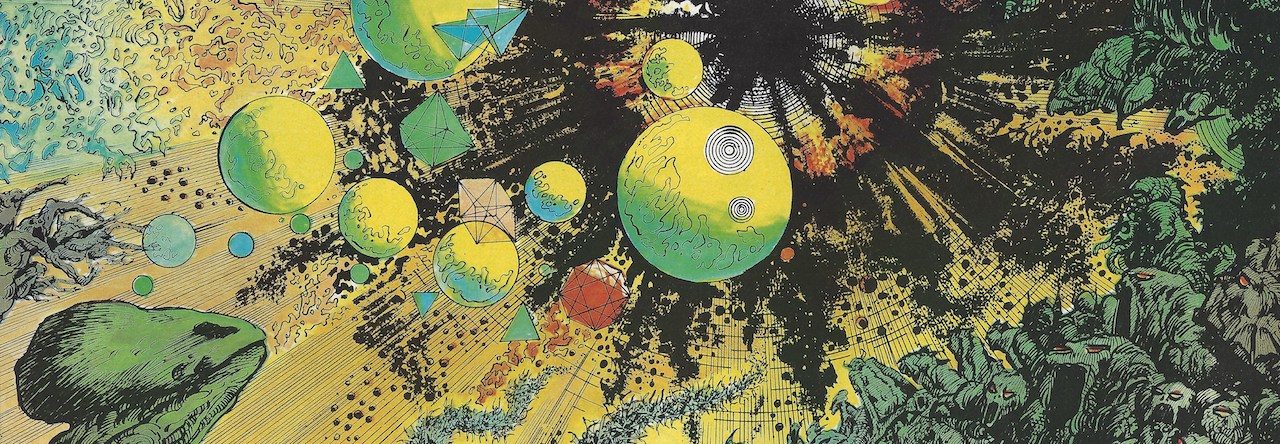
Astonishing X-Men #13-17 is a very flat story with some nice covers. Check ’em out.
Matthew Rosenberg does something here that is increasingly common: He’s focused more on the bits and on trying to write flashy dialog than he is on telling a clear story. It’s a bit of a disease, one that I think you could lay at the feet of Joss Whedon. There must be a lot of Buffy fans out there wanting to write comics.
This series wraps up this series of Astonishing with a limp tale about Alex Summers, recently freed from being falsely turned into a bad guy in Uncanny Avengers, trying to form a new team of X-Men. Of course, he can’t call them X-Men because Kitty Pryde owns the trademark to that name with Xavier dead, and explicitly tells him not to use it. They try to make that a recurring joke, but the artist’s limited ability to draw human facial expressions gets in the way.
The threat this time out is O.N.E., a generic government agency out to do something bad to mutants. Havok tries to recruit Beast, who’s teaching at Harvard until the Reavers show up and wreck the place. Also, Kitty has Warpath follow Havok to keep him out of trouble — and to keep him from calling his group X-Men. (Still not as funny as it wants to be.)
They all crash Dazzler’s third-rate anniversary tour for Sounds of Light and Fury looking for Forge, who’s running her light show and, I assume, doubling as her roadie. He says no to the offer and vanishes from this arc, but Dazzler is desperate for something to and signs. Then, the group finds Colossus drinking away his pain in a dumpy apartment after Kitty walked away from him at the altar. Piotr is easily the most interesting character in this weak bunch, which ends up with a strange showdown at the Xavier Academy that resolves nothing and has no impact. This is five issues of treading water at the most basic level and it’s pretty depressing to read.
A brand-new era? Not quite.
Bonus comic: Dazzler: X-Song #1 (2017) by writer Magdalene Visaggio and artist Laura Braga. This issue ties into the Astonishing X-Men run, with Dazzler going on tour incognito as part of a band with the groan-inducing name Lightbringr, that brings out fans in both the mutant and inhuman communities — often with conflicts popping up at the club venues. There’s some mutant jerks who are showing up at the concerts to buIly the inhuman fans that show up. And of course, Alison has to step in and stop it. There’s some strange scenes with Colossus trying to get Alison to come back to the X-Men. And if there’s a story in here, it’s very slight.
The art fares slightly better, but the interior is sketchy in that storyboard style and doesn’t match the promise of the cover, by Elizabeth Torque and Ian Herring. Dazzler remains a tough character to crack.
Lot of people love the character’s premise and look, but solid stories for Ms. Blaire have been hard to come by, with Chris Claremont’s run with her in X-Men from 1986 to about 1990 standing out as the real exception.
U2 plays “Pride (In The Name Of Love)” on its most-recent tour.
Yesterday was Martin Luther King Day, which always makes me think of my early days in Arizona in 1986-1987.
Just weeks after we moved from the Great White North to the Grand Canyon State, a Mormon car salesman named Evan Mecham was elected governor. He was a Republican who had won the election with some 40 percent of the vote because a third-party candidate split the Democratic support between them. Mecham was a very conservative candidate, but also a political novice. One of his first acts was to cancel the Martin Luther King Day as a state holiday, citing improper political procedure used in creating it by the previous governor, Bruce Babbitt. He defended his action with words that did not serve anyone’s best interest, saying to supporters of a King holiday something along the lines of: You don’t need a holiday, you need to get a job. This immediately became a lightning rod in Arizona politics of the sort that seems so cute and quaint in the age of President Trump.
Welcome to Arizona, pal.
The result was predictable: Boycotts, and lots of them. Stevie Wonder said he wouldn’t play Arizona. Harlan Ellison, one of my favorite writers, said much the same. You could hear the echo of Little Steven Van Zandt’s anti-Apartheid anthem Sun City — you know the words! “I! I! I! I! I! I! Ain’t gonna play Sun Citaaayyyyyy” — took on a second meaning because one of Arizona’s most conservative towns was a sleepy, seniors-only, “I don’t want to pay taxes for other people’s kids’ schools” municipality called — you guessed it — Sun City. Plus, that record featured the original version of Silver and Gold, by Bono and Rolling Stones members Keith Richards and Ron Wood.
The MLK issue presented a potentially big problem for U2, which was preparing to release its now-classic album The Joshua Tree in March 1987. The album heavily evokes the Southwest desert as a place of, alternately, despair and escape. The supporting tour was set to open with multiple dates at Arizona State University in Tempe, and a few more down the road in Tucson.
Clearly, U2 had to do something to address the Arizona MLK situation. Since the release in 1984 of The Unforgettable Fire album, which included two King-praising tracks in the hit Pride (In The Name Of Love) and the elegaic album closer MLK, the band was heavily associated with Martin Luther King. There was no way they could play Arizona without addressing the controversy, but the band had found a lot of support for its music in Arizona and not playing for them was no solution.
Instead of backing down, U2 followed King’s example and stood up for what it believes in. The band donated $10,000 to the recall effort against Mecham and made a strongly worded statement that was released the day the tour was to start and read on the radio and by promoter Barry Fey to the audience at the ASU Activity Center just before the show. (You can see this statement being read on the documentary U2 – Outside, It’s America, which aired through 1987 on MTV and can be seen online and on the DVD included in the deluxe edition of the 20th anniversary edition of The Joshua Tree.)
The segment “Governor Mecham & MLK” begins at the 23:30 mark of “U2 – Outside, It’s America.”
As for Mecham, he had a penchant for sticking his foot in his mouth. He obliviously referred to African Americans as “pickaninnies’ and I think he was truly stunned to find that was not considered a term of affection. He also insisted the press was out to get him, and that laser beams were monitoring his brains. Garry Trudeau turned him into a two-week running gag in the Doonesbury comic strip. One of the local radio stations turned all this into a novelty song done to the tune of Paul Simon’s You Can Call Me Al.
The video for “You Can Call Me Ev,” which features ASU alumnus turned talk-show host Jimmy Kimmel.
When U2 returned to Tempe for two nights in December 1987 to shoot a concert movie at ASU Sun Devil Stadium for the upcoming feature film Rattle and Hum, things got a little weird. This story I did not know until a few years back, when I was reading issue #281 of the U.K.-based music mag Mojo, which put the 30th anniversary of The Joshua Tree on the cover.
The cover of Mojo #281. The CD was not very interesting.
The feature inside begins thus:
“Sun Devil Stadium, Tempe, Arizona, December 20, 2987. It is the final night of the Joshua Tree tour and, on-stage, in the hyper-alert minds of the four members of U2, the air is bristling with danger. The FBI are here, scanning the 55,000-strong crowd for a potential gunman who has issued a death threat against singer Bono, declaring that he will be shot tonight if he dares to sing the third verse of Pride (In The Name Of Love), which directly addresses the assassination of Martin Luther King, 19 years before.”
The story, written by Tom Doyle, recounts the story so far and then tells us what happened next:
“Seventeen songs in, U2 launch into Pride. In the third verse, Bono crouches at the front of the stage and closes his eyes to sing. ‘I looked up at the end of the verse and I clearly wasn’t dead,’ he laughs. ‘But not only that … Adam Clayton was standing in front of me.’
“Astonishingly, U2’s bassist had protectively stepped between Bono and the audience, ready to take a bullet or disuade the shooter. ‘It’s weird what goes through your head,’ says Clayton now. ‘Or maybe not even through your head. Maybe it’s just an instinctive thing of daring someone to carry out a threat like that.’
“The Edge, with the guitarist’s habitual gift for understatement, says, ‘I just thought, That’s a mate …'”
I love this story, but it’s not 100 percent accurate. There’s video of that night’s show on YouTube, and it doesn’t go down the way Doyle describes. Check it out below; the third verse starts at the 2:42 mark.
U2 – Pride (In The Name Of Love) – Live at Tempe, Ariz., Dec. 20, 1987.
I doubt everyone was making this up, which means they were likely talking about the previous night’s show, which happens to be the first U2 show I attended and the one that made me an instant fan of the group’s music. Now, I can’t find video of that night’s show (if you know of one and you’re reading this, let me know!), but I do have audio of it, which you can check out below.
U2 – Pride (In The Name Of Love) – Live at Tempe, Ariz., Dec. 19, 1987.
That night, Bono introduced Pride by saying: “There’s two words that aren’t allowed into this stadium; there’s six words that are. This is Pride (In The Name of Love).” Well after the third verse, Bono says at the 3:53 mark, “The two words: Ev Mecham.” Of course, he botched the pronunciation and said “Mee-chum” instead of “Mee-kam.” But whatever.
Ev Mecham was eventually impeached for violations of campaign finance laws and the Arizona Legislature removed him from office on April 4, 1988. Exactly 20 years after Martin Luther King was assassinated in Memphis. I was amazed no one at the time seemed to mention this.
The aftermath of Mecham’s removal lasted for years. Secretary of State Rose Mofford stepped in as governor and became the first woman to head Arizona’s state government. She had a rockin’ white beehive hairdo, to boot. Various propositions were floated, one changing the electoral system to prevent another gubernatorial candidate from being elected without a majority. That was put to test in the 1990 election, when the thin margin of write-ins and obscure third-party candidates left Republican J. Fife Symington III and Democrat Terry Goddard with just under 50 percent of the vote. That required a repeat of the election with only those two candidates on the ballot. (Side note: It was around this time that Symington’s son had a minor fender bender with me and my 1980 Toyota Celica one morning on the way to class at the University of Arizona. He paid for the damage to my car, but wasn’t nice about it.) Symington won, but was forced to resign in his second term after he was convicted of bank fraud and Arizona law forbade convicted felons from holding office.
The Martin Luther King holiday became a constant source of political idiocy. Arizona’s strong conservative bent meant many people objected to establishing a new holiday in which state employees got the day off with pay because it was a waste of government funds. So attempts were made to eliminate another holiday so MLK Day wouldn’t reward slacker government employees with an extra day off. But they picked Columbus Day for elimination, and the folks descended from Italians took offense. There were competing and especially confusing propositions on the ballot in nearly every election. The result was all the support for an MLK day was split up. I remember covering elections in November 1990 as a journalism student and going to bed rather late on election night with the various MLK propositions leading comfortably, only to wake up and find that the rural results kept any of them from passing. Strangely enough, it was the promise that the NFL would bring the Super Bowl to Phoenix — the city got its team in 1988, when the St. Louis Cardinals relocated to Sun Devil Stadium — that eventually made MLK day official starting in 1993. The Super Bowl was played in the Valley of the Sun in 1996. (I will someday blog about the horrors of seeing Billy Ray Cyrus “singing” the national anthem at a Cardinals’ preseason game and then climbing the rafters during a post-game “concert” in 100-plus degree heat for a marathon rendition of “Achy Breaky Heart.”)
As for Mecham, He continued to rattle around Arizona politics for a while. He was acquitted of criminal charges of campaign fund misappropriation. He tried and failed to create a conservative daily newspaper to counter what he saw as bias against him on behalf of The Arizona Republic. He made some efforts to run for office, including U.S. Senate, but he was a no-go. When he died in 2008 at the age of 83, the obits revealed a lot of facts that weren’t as well known during those pre-internet days when he was a big controversy, including his service in the U.S. Army Air Force in World War II. He earned the Purple Heart and the Air Medal.
I’ve rarely heard U2 talk about Mecham and MLK in the intervening years. I do remember Bono saying something like “We’ve been here before” during the Zoo TV Outdoor Broadcast concert at Sun Devil Stadium in October of 1992. But perhaps that’s for the best. They still play Pride, and it still rocks. I haven’t lived in Arizona since 1996, and it’s not as weird as it used to be. But it’s still weird, and I can’t imagine it ever being not weird.
Vice purports to tell the tale of how a largely unremarkable man from Wyoming rose to the heights of power in Washington, D.C., eventually expanding executive powers to unprecedented levels to wage war, pad the pockets of loyal supporters and undermine any attempts to expose those deeds to the people. Starring such reliable comic talents as Steve Carell and Sam Rockwell, along with the always-excellent Christian Bale as Dick Cheney and Amy Adams as Lynne Cheney, and Tyler Perry as Colin Powell (never thought I’d write that sentence) it’s not unreasonable to expect a mix of comedy, drama and satire along the lines of director Adam McKay’s rather-good previous film, The Big Short.
But despite a few good laughs about Cheney’s weak heart and a really fun faux finale about halfway through, Vice overall falls short as a comedy and a drama. Some of that comes from the subject matter, with the filmmakers admitting at the very start of the film that Cheney is famously secretive and little is publicly known about why he’s done the things he’s done. Personally, I found it odd to be watching a portrayal of events that I paid close attention to as they happened (I worked at various newspapers through the 1990s and continue to follow the news) and seeing little added to events by the film that would shock or surprise or change the perception of someone with even the most cursory understanding of those events.
Bale is, as always,
great. Yeah, there’s the great makeup that makes him look exactly like Cheney.
But it’s the mannerisms, the body language and the voice (remember, Bale’s
natural accent is Welsh) that really make the performance remarkable. It’s just
too bad he didn’t have more to do with it.
I’m sure McKay and his collaborators debated heavily the correct balance of comedy and drama for this project. The comic moments leave the biggest impact, so it’s a shame they didn’t just play up those points more to expose the Cheney’s career for the comedy of errors history has revealed much of it to be.
I used to love to read newspapers, the bigger the better. As a journalism student in the late 1980s and early 1990s — before the internet — each newspaper was different in some way or another. The big guns, like The New York Times, Wall Street Journal, Washington Post and the Los Angeles Times, were thick, juicy sources of knowledge. And they were produced daily, each with hundreds of original articles written by professional journalists who had to work hard for the opportunity to write for those papers. It was always too much information to absorb — even a college-age brain can absorb only so much — but it was inspiring and exciting to know that this knowledge was out there and available for the reasonable price of 50 cents or maybe a dollar a day.
Twenty years into the internet age, that experience is much harder to come by. Each of those big papers has shrunk — some significantly — as more and more data has gone online. And even though it’s easier than ever to find any particular article or report, knowing what to search for has become harder than ever. Even skimming headlines in a newspaper, the editorial choices affected what you saw. What was on the front page and got big play mattered, all the way down to the smallest brief. Each article was chosen as the best way to fill the available space, and those choices affected the experience of everyone reading the paper. When a major event happened, you couldn’t miss it. And if you browsed through the whole paper, you usually got a very solid and interesting overview of what’s going on in the world.
I’ve found myself missing this experience of late. Like many, I’m sure, I was getting too much of my news from Facebook and other social media, or websites of my choosing that covered various topics. This is how bubbles are formed. My social media connections often are my connections because of shared experiences or viewpoints, meaning the same messages get reinforced as the same story — often from different sites — gets posted and reposted and commented on again and again. I found myself increasingly disconnecting from Facebook for that reason. I like the Trump jokes, but the cynicism that comes from seeing important news events through snarky commentary or overly earnest pleas for honesty became unsatisfying.
So I’ve been looking for ways to recreate a more focused and objective way to follow the news — both the big picture stuff we all should care about and the more specific stuff that I am personally interested in: movies, comics and guitars. Resubscribing to print seemed impractical, as I knew how often the papers delivered to my driveway went unread. So here are some of the digital tools I’ve found to develop a well-rounded news diet.
E-newspapers: It’s nothing new that newspapers have been making PDF versions of each day’s edition (or at least their front pages) on their website. But the new e-newspaper editions at the Los Angeles Times and The New York Times are a welcome evolution. The L.A. Times‘ e-newspaper appears to be a work in progress because it’s not the smoothest or most polished presentation. But it is an app that launches within your browser that lets you page through PDFs of each day’s paper, with links to jump to each section. But best of all, if you click on a story, it opens up in an easy-to-read window that clearly shows the photos and text in a continuous display that’s very easy to read. Better yet, there’s a “Next Article” link through which you can browse through every article in that day’s paper. Today’s edition has 128 articles over 46 pages, and each article can be shared, highlighted, printed, translated or read aloud. Again, it’s not perfect: Sometimes stories show up twice (once on the cover and once on the jump) and there’s the occasional formatting error that surely occurred when the copy was exported from the print production system to whatever is used for the e-newspaper. But it still is a focused way to read the paper and its content. The New York Times‘ version of this is similar but more polished in its function and presentation. Its e-newspaper allows you to scroll through all the articles in that day’s edition, with a sidebar listing headlines so you can jump to a specific story or section. I typically will scroll through all the articles in the Front Section, and then skim the World, Nation and Arts section. I can read through both papers in about a half hour, without generating trash, or getting ink on my hands, seeing all the photos and graphics in color with captions, and I can feel confident that I’ve got a basic idea of what’s going on in the world.
Email newsletters: These aren’t new either, but good ones are increasingly hard to find. My personal favorite is from The Week, which sends out a daily “10 things you need to know today” newsletter each morning. Like the magazine version, this is an extremely well edited summary of what’s going on, gathered from the best web sources all over the globe, and you can read it in a couple minutes. The New York Times (them again!) also have an excellent Daily Briefing email that goes out each morning and summarizes the day’s event and highlights some of the feature reporting in that day’s newspaper. There’s a fair bit of overlap, but I find reading The Week first allows me to avoid duplication and scroll through the Times‘ briefing to get the stories unique to that e-letter, backing up what I’ve already read.
RSS feeds: I used to rely heavily on a solid list of feeds and a good RSS reader. But in the era of social media, it seems like no one really talks any more about this simple but useful technology. I use Feedly, but I’m always on the lookout for a good, free (or very cheap) RSS reader for Mac, so if you have suggestions, let me know. One of the problems with feeds is they can be tough to manage. Smaller sites in particular can dry up and stop posting, leaving you with a dead link that has to be remembered to be routed out and deleted.
I’d love to hear how you keep up on the news, so please leave a comment or drop me a note at thomasjmclean@gmail.com. Thanks!
The Walking Dead #115 was the top-selling comic book of 2013.
Despite all the turmoil, 2013 turned out to be a fantastic year for the comics industry.
Diamond Comics Distributors just posted its year-end stats, revealing comic book sales were up more than 10 percent over 2012 and graphic novels up 6.5 percent. That’s an overall sales boost of just over 9 percent.
Both unit sales and dollar sales charts showed Marvel and DC collectively accounting for about two-thirds of the business, followed in dollar share by Image Comics, IDW, Dark Horse, Dynamite, Boom!, Eaglemoss, Valiant and Avatar Press.
The Walking Dead #115 turned out to be the top-selling single issue of the year — fueled no doubt by the ten connecting variant covers celebrating the series’ 10th anniversary— followed by DC relaunches Justice League of America #1 and Superman Unchained #1. Marvel dominated the rest of the top ten, with Guardians of the Galaxy #1, Superior Spider-Man #1, Infinity #1, X-Men #1, Age of Ultron #1 and Uncanny X-Men #1. Rounding out the list was Superman Unchained #2.
Graphic novels were dominated by Image, with volumes of Saga and Walking Dead taking the top six spots. Marvel’s sole title on the list was Hawkeye, Vol. 1, while Batman scored two for DC with The Court of Owls and The Killing Joke Special Edition.
The charts also show why publishers are constantly rebooting and relaunching titles: Those tactics sell lots of comics. So I expect we’ll see a lot more of that.
On the plus side, it’s great to see almost all the major publishers posting gains and also that each has forged for itself a strong identity in the market through publishing quality work. I can think of books I like from pretty much every one of the top publishers, which is saying something.
It’s also interesting to see Diamond list its account tally for comic book specialty shops at more than 3,500. That’s up from what I remember it being in the not-too-distant past, and an increase in this number likely has a lot to do with market growth considering these sales tallied here are sales to retailers, not sell-through numbers. I’ve long thought that more comics shops were important for the industry just to get the damn things out there and in front of people who’d buy comics and like them if they could actually see them for sale somewhere.
Star Wars #107 (Sept. 1986), the final issue of Marvel’s original run of Star Wars comics.
I really want Marvel to get Jo Duffy and Cindy Martin back and restart with Star Wars #108.
After more than 20 years of publishing Star Wars comics, Dark Horse will give up the reins as Disney hands the license for the mega-franchise back to Marvel, the company that had it in the first place starting in 2015.
This move was absolutely no surprise to anyone after Marvel parent company Disney acquired Lucasfilm and the entire Star Wars property last year. But it’s a big change for fans of Star Wars comics given the job Dark Horse has done for many years on the property.
I grew up with the original Marvel series and collecting it was my gateway into the entire comics medium. Those comics have many quirks that came from being produced on a monthly basis in and around the original trilogy release. That meant Marvel had odd obstacles to the series, like being unable to resolve the major plot points of the movies and forcing them to avoid direct confrontations with Darth Vader or have the rebels race off to rescue Han Solo.
But there was some excellent work done in there that had real energy and remain good comics. I particularly liked the long run of Archie Goodwin and Carmine Infantino, which gave us the “Waterworld,” “Wheel” and “Valence the Hunter” storylines; the excellent run by David Michelinie and Walt Simonson that introduced Shira Brie and turned Luke into a traitor; and the final run by Jo Duffy and the delightful art of Cynthia Martin that was sadly cut short when Lucasfilm basically mothballed all Star Wars licenses in the mid-1980s. This was good stuff and I’d like to think Marvel could once again do a good job with Star Wars.
But Dark Horse and its approach of many miniseries and filling in the millennia-long history of the Galaxy Far, Far Away seems more in synch with what modern fans want from Star Wars comics. When Dark Horse began its Star Wars comics — picking up the Dark Empire miniseries that had originally been in the works at Marvel’s Epic line — it really was a huge part of an entire Star Wars renaissance that, along with the Timothy Zahn novels, reminded people how much fun this stuff was. It also took the entire canon more seriously and Dark Horse clearly put a lot of thought into its Star Wars comics and a lot of effort into the execution. There long ago were too many Dark Horse Star Wars comics for me to want to keep up with, but every year or so there would be something cool to pull lapsed fans back in. I’m thinking in particular of the very cool adaptations of the Zahn novels and, more recently, the Brian Wood series and the current miniseries adapting George Lucas’ rough draft screenplay into comics form.
I’ll be sorry to see the end of the Wood series in particular, but at the same time Marvel might be able to bring some raw energy and more focus to Star Wars comic-dom. Plus, I’d love to see a Marvel Omnibus edition of the old series. I’d have to dig deep and splurge for that one.
Original art for X-Men #141 by John Byrne and Terry Austin, as it appears in
Fantagraphics’ The X-Men Chronicles II from 1982.
2013 was a pretty good year for comic-book movies in particular — and movies in general — with 2014 also looking sharp.
Top of my list to see is, not surprisingly, X-Men: Days of Future Past, due out May 23 and looking to have the same sort of big Memorial Day box-office debut as X-Men: The Last Stand. This is adapted from one of the most influential and beloved X-Men stories, published long ago in 1980 in The Uncanny X-Men #141 and 142.
I remember being a new X-Men fan in the mid-1980s and realizing the importance of this story was second perhaps only to the Dark Phoenix saga in the mutant mythos. I scored my copy of #141 at a long-gone comics shop in Phoenix for something ridiculous like 50 cents back in the fall or winter of 1986-87. The following summer, I bought #142 at All About Books and Comics for an amount I can’t even recall. I took #141 to my first Comic-Con in San Diego in 1993 and got it signed on the first page by John Byrne and on the cover by Chris Claremont. The story — in which an adult Kate Pryde psychically travels back in time from the desolate future of 2013 to her younger self in 1980 to convince the X-Men to stop the Brotherhood of Evil Mutants’ planned assassination of future president and anti-mutant activist Sen. Robert Kelly.
This story fully brought the Holocaust themes Claremont had been hinting at into the X-Men, and the future timeline in which Sentinels rules America and had hunted down or imprisoned in work camps all known mutants was startling in its boldness. Not only were bunches of X-Men already dead, but we saw a glimpse of the future reformed Magneto, the then-mysterious redhead Rachel, and the gruesome deaths of Wolverine, Storm and Colossus. Even though it was copped from an episode of one of the Brit sci-fi TV shows like The Avengers or Doctor Who — favorites at the time of both Claremont and Byrne — the story really works well as the ultimate expression of everything that the X-Men are fighting for going wrong. The movie version will be quite different, with Wolverine reportedly put in the main role of time traveler instead of Kitty, but it’s exciting to see the X-Men movie series move forward with a kind of merging of the best parts of Bryan Singer’s original films and Matthew Vaughn’s First Class crew. I expect big things for this movie, and for the Apocalypse follow-up Singer teased for 2016.
The Amazing Spider-Man 2 is due out May 2 and I expect to like it much more than the first installment in the series, which spent so much time retelling the origin story that it was hard to figure out what made Marc Webb’s version very different from Sam Raimi’s. I like Jamie Foxx as Electro and Paul Giamatti as The Rhino, but I’m not looking forward to playing out once again the inevitably tragic fate of Gwen Stacy. That’ll probably be saved for part 3, but we all know it’s still coming.
300: Rise of an Empire, due out March 7, makes me scratch my head a bit. I don’t think we really needed a prequel or sequel to this movie, which I think got a bit of a bad rap when it came out from critics. It was a cool exercise in style that paid off extremely well for Zack Snyder et al., but I suspect there will be little here to make the sequel stand out and stand up on its own.
The same could be said for Sin City: A Dame to Kill For, which really should have been made about five years ago. Due out Aug. 22, this won’t have the same “wow” impact that the first Sin City did, but the stories Robert Rodriguez and Frank Miller have to work with are pretty good and should make for a fun movie and a modest hit if it turns out comparable quality wise to the original.
Captain America: The Winter Soldier, out April 4, looks very good. The opportunity to see Cap working in the modern world will help keep things fresh after the obligatory World War II outing in the first movie. I haven’t read Ed Brubaker’s run and am not familiar with the specifics of the Winter Solder storyline, though people whose opinions I trust assure me it’s good, so I’m thinking this will be another hit for Marvel.
And then there’s the big wildcard and gamble of the year: Marvel’s Guardians of the Galaxy, due Aug. 1, right after Comic-Con. Marvel’s obviously putting a lot of muscle into this one, with some interesting casting and a more movie-friendly take on the franchise already tested out as a comic. I expect this gamble will pay off for Marvel, especially in the usually sleepy movie month of August, and show the studio’s savvy at turning even its C-list and D-list characters into hit movies. I wish they’d lend some of that knowhow to DC, which still is having a hard time getting B-list characters off the ground in theaters.
And that’s just the comic-book movies. There’s also cool stuff like Transcendence, Interstellar, Dawn of the Planet of the Apes, The Hunger Games: Mockingjay, Part 1 and The Hobbit: There and Back Again to look forward to.
* Lots of TV shows (of the prestigious variety!) have been making the jump into comics, with Boom! putting out a very cool Sons of Anarchy series and Marvel taking Dexter on a tangent with a series by the character’s creator Jeff Lindsay and a second coming soon. That’s in addition to The X-Files: Season 10 series that’s more like the sort of thing you expect to see in comics. Sons of Anarchy is a show I’ve only tangentially watched, but I enjoyed the comic quite a bit.
Dexter #5
Marvel’s Dexter series was quite good and a lot better than the last few seasons of the Showtime series. I read the first Dexter book a few years back after Showtime dropped a copy in the gift bag from a Dexter TV show party at Comic-Con and really enjoyed it. Turns out there’s a long-running series of books that take Lindsay’s original idea in a different direction. Lindsay is enjoying doing comics (at least he said so on his Reddit blog). It’s always interesting to see creators from other fields tackle comics, and I think comics could benefit from more novelists jumping into the fray to counter the overdone screenwriting influences and the decompressed storytelling it inspires.
As for The X-Files: Season 10, I still think writer Joe Harris is doing a good job and it’s cool that creator Chris Carter is pitching in, too. I don’t think this show will ever quite re-capture the same zeitgeist it did in the 1990s, but it is nice to revisit the characters and ideas in comic book form, which has a bit more kind to the series than the big-screen sequel of a few years back.
Grendel #1
* I visit my old stomping grounds in Arizona once or twice a year, and finally managed to make time for a visit to All About Books and Comics. I used to frequent the store during summers in the late 1980s and early 1990s, and always enjoyed the depth of the back issue selection in particular. I’m happy to report that hasn’t changed a bit, and a good portion of the store was devoted to selling inexpensive packs of classic comics runs from the past 30 years or so. I snagged a batch of Captain Canuck originals and the first 10 issues of Comico’s Grendel series, as well a lengthy run of the original Power Pack run — all for a great price. I briefly chatted with owner Alan Giroux about the old days and how much we both like shops that stock lots and lots of back issues. I am grateful that Los Angeles has so many great comics shops, but one that stocks back issues like All About is at this point just another item on my want list.
Shade: The Changing Man #1
* Also in Arizona, I found some boxes of old Star Trek and V paperbacks from the late 1980s and early 1990s, along with a few relics from the speculator age of comics: three sets of X-Force #1, three sets of X-Men #1 and polybagged black cover and green cover copies of Spider-Man #1. I also found a poster from Atomic Comics’ 1993 Mega-Jam, signed by a ton of creators, including the late Steve Gerber. I don’t remember where it came from, as I didn’t attend the event, but it’s totally extreme, dude. And just to show I don’t have completely horrible taste, this box also included most of Steve Ditko’s 1970s DC Comics series Shade: The Changing Man. That was some funky, weird, cool stuff.
For Christmas, I got a copy of that really big book 75 Years of DC Comics: The Art of Modern Mythmaking, by Paul Levitz. It’s taken me a while to make much of a dent in it (though it could certainly put a dent in just about anything else) but it’s a really great book. The presentation alone is fabulous.
The Wolverine was a decent movie, but I’m afraid it hasn’t stuck with me. (My previous post on the movie was written in mid-August, but somehow I forgot to publish it until now!) I was compiling a list of this year’s releases for work-related research and actually forgot it came out. Maybe once it hits Blu-ray, it’ll make more of an impression. Same for Man of Steel.
I’m still not especially interested in the various DC TV series, having sampled Arrow and never taking to Smallville despite numerous attempts to get into it. Plans for Fox’s Gotham series sounds like it could change that, though I also really would like to see that WB-Fox collaboration yield a home-video release of the 1966 Batman TV series. Marvel’s Agents of S.H.I.E.L.D. was entertaining and full of quippy characters but not exactly strong on story, making it a fairly typical Joss Whedon TV series. I hope it gets better.
My 2-year-old daughter loves superheroes, as I have mentioned before, and one of her favorites is Wonder Woman. Looking at the version of Wonder Woman that gets licensed to the mass market, I have to say I like it a lot more than I ever liked any of the WW comics I have read.
I bought some digital comics a while back to pass the time while my daughter played at a local playground. It was a smooth process and a nice reading experience, though I still think they are priced too high. For $1.99 or more, I want a physical copy of the book, too.
Thor: The Dark World is looking pretty good from the various trailers and such — better than the first one. I missed Kick-Ass 2; will have to catch it on Blu-ray.
Star Trek: The Next Generation first went on the air 25 years ago this week. This makes me feel old. I was a freshman in college when it came on, and vividly remember how excited people were to have an actual sci-fi show back on the air. I never would have believed in 1987 that there would be so much sci-fi, fantasy and comics stuff on TV and in movies as there is now.
I’m reading the novel of A Game of Thrones and really enjoying it. But, boy, has it been a long time since I’ve read 800 pages of prose fiction! Does anyone know for sure if the shadowcats mentioned in the book are a reference to Kitty Pryde of the X-Men? I know George R.R. Martin is a Marvel fan and Claremont put references to Martin’s book The Armageddon Rag into the X-Men and The New Mutants way back around 1984. Anyway, I’m finding the effort, so far, is worth it. Now, if I can just stay awake long enough to find the time to finish it …
I’ve been thinking about The Wolverine, which I caught at a morning screening — it’s what you have to do when you have a toddler! — on opening weekend.
There’s a lot to like in this movie, but it’s far from perfect. The movie’s been out a few weeks now, so I’m going to talk about stuff that qualifies as spoilers, so consider yourself warned.
Here’s the pro side:
This is the most faithful adaptation of a Marvel comic-book story to come to screen so far. There are deviations from the 1982 Wolverine miniseries it’s based on, but I was surprised by how much of that story was kept intact.
I liked that the female characters were interesting. Yukio in particular is a favorite of mine from the original comic. And while she’s not quite the same character here, she played a major role in the story and held her own quite well. Mariko didn’t fare quite as well. I never fully bought the romantic connection between her and Logan. The comic version, despite its hokey elements, is a bit more convincing.
The end tag previewing next summer’s X-Men: Days of Future Past was terrific. Patrick Stewart is back! So is Ian McKellan! I am now very much looking forward to that pic and find myself hoping Bryan Singer can really pull off an amazing movie that not only heals some of the wounds left by X-Men: The Last Stand, but also unifies the whole franchise and gives it an exciting way to go forward. My biggest concern is living up to the impact of the original comic book story, which has to be significantly fleshed out for a feature film.
I liked that there was a lot of Japanese spoken in the film, both with and without subtitles.
While Viper was probably the least necessary addition to the movie, I really liked Svetlana Khodchenkova in the role. She had just the right amount of sexy sinister for a character like that.
The posters with the Japanese style artwork are great.
Here’s the con side:
After a very satisfying and interesting set up, the final act is so conventional as to be boring. The Silver Samurai, as done in this movie, was far less interesting than in the comics. The big reveal of Harada as being inside the big robot suit is just plain dull and has almost no emotional impact.
I wish more had been done to play up the love triangle of the original comic, with Yukio being an obvious and very willing match for Logan, who just can’t get over Mariko. That was a nice touch in the comic that this movie could have used a bit more of.
Viper is not well integrated into the story. She seems pretty unnecessary and her power is oddly portrayed and never explained. I don’t recall Viper having any powers in the comics. But I do remember she somehow convinced Wolverine to willingly marry her for some reason. (I remember it was in Chris Claremont’s return to the character in Wolverine #125-128 or so, but not the reasons behind that twist.) That might have been a more interesting element to play with here.
I hate the ripping out of Wolverine’s claws. The bone claws, in a word, suck. I always thought the bone claws were the lamest thing ever done to the character. My problem with it is it makes absolutely no sense. We were told for decades that the claws were housed in some kind of bionic mechanism, which must have been confirmed by all the medical exams done on Logan by everyone from the Sentinels (as far back as The Uncanny X-Men #98) through the Shi’ar and onward. Even in the original Days of Future Past storyline, when the Sentinels burn off Wolverine’s flesh, you can see the manmade mechanism that operates his claws in his bones. Of course, that’s a future timeline Wolverine, so it’s easy to explain away. But that doesn’t mean it’s still not a stupid idea.
No credit whatsoever for Chris Claremont, Frank Miller or Josef Rubinstein for coming up with the original comic-book story. Even more interesting, it appears Claremont doesn’t get even a token payment, while Len Wein, who officially created Wolverine but had little to do with the character as he exists today, did.
The Wolverine looks like a solid but not spectacular hit. So far, it’s made about $113 million at the domestic box office and about $195 million overseas, for a decent total of $308 million on an estimated budget of $120 million. Anticipation for X-Men: Days of Future Past is running high, and it’s clear Fox is going to continue to develop and release X-Men movies on a regular basis, thus preventing the rights from reverting to Marvel. The series appears to be on the upswing, with the well-received X-Men: First Class and now The Wolverine getting fans past the disappointments of X-Men: The Last Stand and X-Men Origins: Wolverine.
I would love to see the franchise move past prequels and into new, fresh territory with new characters, new villains and new scenarios. After The Wolverine, it’s looking more likely than before, and I think fans of the comics and the movies can be glad of that.