A longtime showbiz journalist and fan's thoughts on comic books, movies and other cool stuff.

Category: Bags and Boards

Catching Up with the X-Men, Part 1

All-New X-Men #1

The most well-read post I ever put on this blog was one that went up Feb. 23, 2012, in which I talked about breaking my 26-year weekly superhero comic-book habit.

More than a year later, I find myself drawn back to superhero comics, though not as much as I have been. I’ll start by saying I’m just not into DC’s The New 52. I’m sure there are some good books in the line, but nothing I’ve seen inspires me to invest the time and money required.

Pretty much the only thing that can get me to plunk down my coins and invest my time are my two favorite Marvel franchises: X-Men and Avengers. For me, X-Men was always the best idea Marvel had. I may have said this before, but it bears repeating: X-Men is at heart a science-fiction concept dressed up with superhero conventions. As such, it has a depth to it that straighter takes on the superhero genre generally lack. It certainly has helped it maintain a hold on my imagination and has the ability to suck me back in, repeatedly, throughout my life.

I stopped reading X-Men comics twice before. The first was in 1995, when the Age of Apocalypse came along at a time when my discontent with the X-Men titles in those post-Chris Claremont years was at a high. Like The New 52, it made a great jumping off point. It lasted a little more than a year before I was sucked back in around The Uncanny X-Men #332. And it didn’t last long — I was gone again by the time the Onslaught crossover arrived only a few issues later. This second absence lasted, again, about a year or so before I came back on board. The second return was aided by my move to California in 1996 and the discovery of numerous cheap back-issue sources that made it easy and fun to fill in the gaps in all the various series.

So it was again that, after the horrid event called Schism and the inevitable re-launch of The Uncanny X-Men after 544 issues, that it was again time to say good-bye. And, again, it held for a little more than a year before access to cheap back issues overcame my resistance and pulled me right back in.

The break has, overall, been good for me and I come back to the X-Men family of books with fresh eyes and a new appreciation for how much they’ve managed to improve in my absence. While they are in no way great works of art or classics of the genre or medium, the X-Men books have become a rather enjoyable line of comics. More than at any time in recent memory, the various books have — for the most part — a reason to exist, some kind of point to them, and are nicely executed in both script and, especially, art.

I have to give kudos to Marvel for double shipping series like All-New X-Men and Wolverine and the X-Men. At first, I thought that would just be too much, but it turns out to make those series even more engaging because there’s a decent new episode coming out pretty much every week. I have heard some store owners complain how difficult it can be for them to handle orders on those titles, but overall they seem to sell well enough that no one’s nose is too far out of place.

Having recently read through pretty much all the Marvel Now! issues of nine different X-Men series, I’ll run though them all very quickly. This will take more than one post and spoiler warnings are in full effect for those who haven’t read these books.

All-New X-Men #11

All-New X-Men is the book I was fearing the most. Why? One word: Bendis. As Marvel’s go-to writer, Brian Michael Bendis has had a pretty amazing run overall at Marvel, though I found his work on the various Avengers titles became too, well, cutesy, for lack of a better word. I’m not a big fan of the kind of rambling, pop-culture filled dialog that Bendis likes to fill entire issues with when he can. I thought that stuff worked great when Bendis did his own comics, like Goldfish, Jinx or Fortune and Glory. But he’s surprised me here with more action-oriented stories and a good focus on character.

The premise of the book is, however, pretty silly. It starts with Beast thinking he’s dying (he really just evolving again) and picking up on something Iceman says about how the young Scott Summers would never become the monster that the current Cyclops is. So he goes back in time and brings the original, teen-age X-Men into the present. What’s amazing is that this is nowhere as bad as it sounds, and is actually pretty good. The jokes about anachronisms are kept to a minimum, and the younger versions all come off as very interesting takes on the characters, especially Jean Grey. That last part is even more astounding given how long it’s been since the ever-morphing Jean has been interesting.

What really helps this book is the art, most of it by Bendis’ former Ultimate Spider-Man collaborator Stuart Immonen with inks from Wade von Grawbadger. The other artist in the rotation, David Marquez, is up to the task of keeping the book moving along at a quick pace and maintaining the slick look Immonen and von Grawbadger have established.

So far, the original team has met its older versions (the ones that are still alive — sorry, Jean!), the Avengers, as well as enemies like Mystique, who don’t always appear as bad at first to the young, time-displaced mutants. After 11 issues, I’m not sure exactly where this title is going or what its long-term prospects are because it seems clear the teenage X-Men have to return to the past at some point or else completely change the timeline and invalidate years of X-Men stories (not a good idea; see the Spider-Clone saga for reference).

Uncanny X-Men (Vol. 3) #1

The flip side comes in the relaunched Uncanny X-Men, known as Vol. 3. This book follows Cyclops’ team and features some interesting character dynamics, especially with Magneto. The art by Chris Bachalo, with help from Frazier Irving, is worth the price of admission all by itself. The stories are moving along slowly, but there is a nice counter point to this comic — it complements All-New X-Men without making either series redundant.

X-Men: Legacy (Vol. 2) #1

X-Men: Legacy is the one book I decidedly did not like after reading the first four issues. This series is about David Haller, a.k.a. Legion, the son of Charles Xavier whose mind is full of split personalities, each with its own power. While I like the craziness the cover designs promise, this is just not a character I’ve ever found interesting and an entire series about him battling with his inner demons — and is largely disconnected from other X-Men series — just doesn’t cut it for me.

X-Men (Vol. 4) #1

The simply titled X-Men (is this Vol. 3 or Vol. 4? I can’t remember!) from writer Brian Wood and artists Olivier Coipel and Mark Morales got a solid launch from the apparent novelty of it being a team of all-female mutants. Of course, Wood has his own fans and they bring some high expectations to this title, most of which he easily meets. The debut issue focuses on Jubilee, apparently no longer a vampire. She’s on the run with a little baby and turns to the X-Men for help. She gets it from Storm, Kitty, Psylocke, Rogue and Rachel Grey. That’s a good lineup for an X-Men book, no matter the gender politics, but that’s been the focus of a lot of the publicity surrounding this book’s launch. I happen to like all those characters (Jubilee can be a bit annoying, but she’s better by far than, say, Marrow), and it’s a solid book. I think Storm benefits the most from this title, being a character who really dominated the series back in Claremont’s days and has since struggled to maintain her popularity. I love the return to the old 1980s mohawk look, and the overall take on her is quite promising. Rogue, Kitty and Psylocke all have received plenty of attention in recent years, but I have to say I do like the new costume for Psylocke. Rachel has been a confusing character almost from the start, but I’d like to see what Wood can do with her.

Next: We’ll get into the X-Force and Wolverine titles.

Byrne’s The High Ways veers off course

John Byrne is at his best when he’s doing science fiction. Take Next Men as the ultimate example. That series followed the old-school rules of science fiction, by setting its premise and following through as realistically as possible. Byrne’s affection for classic Star Trek (i.e., the good stuff, not the recent reboot flicks from Jar Jar Abrams) and its attempts very early on to be the TV version of classic science fiction literature is obvious.

A lot of that drives The High Ways (IDW, $3.99 each) a four-issue sci-fi series that should be better than it is. The story begins with rookie Eddie Wallace joining the crew of the space freighter Carol Anne, along with first mate Marilyn Jones and Captain Jack Cagney. After Wallace is appropriately initiated into space life (always wear your suit!) the Carol Anne heads out to pick up some cargo on Europa. That’s where the mystery begins, with a strange creature spotted outside the science base there and no cargo for Cagney to pick up.

What follows is an odd story with a bunch of twists and turns that end up feeling very random instead of satisfyingly twisty. This is the kind of story that attempts to avoid the common sci-fi criticism of scientific inaccuracy by being as scientifically realistic as possible. And it achieves that aspect of it, but in doing so it fails to give its characters any real personality or tell a story with sufficient emotion or reason for the reader to fully engage in this world.

Byrne’s art remains consistent and I still think no one draws spaceship-style tech stuff as well as he does. The storytelling is very solid and Byrne’s style has evolved over the years into something looser and more expressive than his classic 1970s and 1980s work on X-Men, Fantastic Four and Superman. It’s quite a nice change if you can just let go of expecting his work to have that same clean and pristine quality and just enjoy it for what it is, and what it is is some damn fine drawing.

I would check out a sequel to The High Ways — I think there is something in the approach and style. A more engaging story could build this up into something really cool.

Thief of Thieves steals the show

I’m not the biggest fan of crime comics — I like them, but am not compelled to read a whole lot of them with the notable exceptions of series like Stray Bullets and Sin City, neither of which seems likely to return soon. (I was going to include 100 Bullets in that comment, but I just saw there’s a Brother Lono sequel miniseries coming soon … .)

But Robert Kirkman’s Thief of Thieves is a really fun read. This second arc (issues #8-13, Image Comics, $2.99 each) is, I think, better than the first. This arc sees master thief Conrad Paulson, a.k.a. Redmond, in some family trouble as his son, Auggie, gets in deep trouble trying to follow in his old man’s footsteps. That sets up some conflict with his ex-wife and the cops trying to nail him. Of course, Conrad has to step in when Auggie’s girlfriend is kidnapped and the best-laid plans fall victim to Murphy’s Law.


None of this is particularly innovative stuff, but it’s very slickly done. The characters are believable and their motivations clear. It’s also not too bogged down by details and arcane politics. It’s an easy series to get into and follow, with nice, spare scripting from James Asmus.

The art by Shawn Martinbrough is a major selling point. His style is modern, clear and moody but not as cartoony or abstract as a lot of crime comics seem to be. He’s also doing all the art, on every issue to date, with coloring by Felix Serrano. That gives the book a consistent look that way too many comics fail to achieve.

My thought after finishing the arc was that this would make a great TV series for USA Network, where it would fit in very nicely alongside Burn Notice and White Collar. It looks like exactly that idea is in the works at AMC, which makes sense with that network being home to Kirkman’s mega-hit The Walking Dead.

That this comic is published on a regular schedule is also something very much worth noting. It’s just another factor that makes this an interesting read and a title very much worth picking up.

Perky art, story keep up interest in Sex

Joe Casey is at his best when he’s experimenting. That’s why his explicitly subversive comics like Automatic Kafka and Butcher Baker stand out so far ahead of his work on Marvel or DC superheroes despite their short runs.

So, what could be more subversive than a comic titled Sex (Image Comics, $2.99 each), which evokes instant interest but is also vague enough that there’s no clue in it to what the book might actually be about.

What it’s definitely not is a traditional “adults-only” tale in the style of late-night weekend programming on Cinemax. There is sex in the book, and it’s relevant to the story. But there’s a lot of other stuff going on here, starting with Simon Cooke, a retired and repressed superhero who returns to run the mega company his family started in futuristic but kinky Saturn City.

Simon’s repression is tested by Annabelle LaGravenese, who was formerly a Catwoman-like villian to Cooke’s Batman. Now owner of a sex club, her appearance confuses Cooke as to what exactly it is he’s repressing — the desire to play superhero or just plain sex.

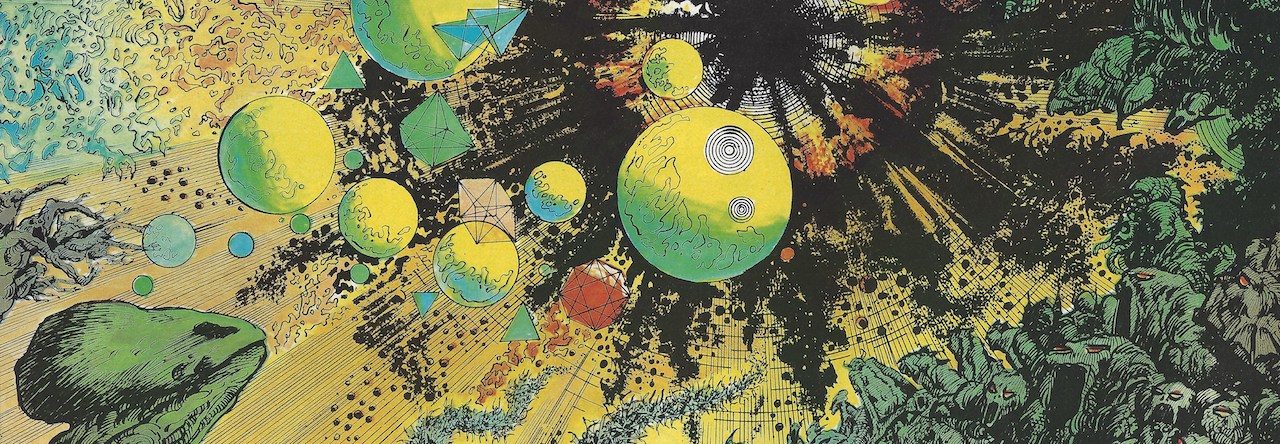
The art by Piotr Kowalski is terrific. This has a very European look to it, very much owing a huge debt to the works of Moebius in both art style and coloring. Even the lettering evokes Moebius’ work, with colored highlights used instead of bold copy to emphasize certain words.

I’m still not exactly sure a lot is happening plot wise in this book, but after three issues, I’m still interested in Sex, so I’ll be back for the fourth.

There’s nothing recycled about Great Pacific

Another entry in the eco-thriller sub-genre is Great Pacific #1-6 (Image Comics, $2.99 each), from writer Joe Harris and artist Martin Morazzo.

This takes a very different tack from The Massive, focusing on a fascinating real-life phenomenon known as the Great Pacific Gyre — a spot in the middle of the ocean where tons of plastic refuse has congealed into a kind of floating island. Harris injects Chas Worthington III, an idealistic oil company heir, into this environment, bringing along with him an experimental technology that could break down plastic waste into useful components like oil or fresh water. 
After staging his own death and embezzling billions from the family business, Chas and his major domo Alex set about inhabiting the gyre and establishing it under international law as the nation of New Texas. Of course, very little goes according to plan, with pirates, lost nukes, native populations and a mutant octopus entering the mix. 
Harris’ story is more fantastic, but with the gyre itself being real, it works really well. Morazzo is obviously influenced by Frank Quitely, though his style evolves for the better over the course of the first six issues. The colors by Tiza Studio are also of note for adding to the distinctive look of Morazzo’s open-line style with a distinctive and consistent palette that never overwhelms or obscures. 
The ending to the first arc includes a nice surprise twist that I think will make the second arc more grounded and possibly even more exciting. This book has become a genuine hit for Harris and Morozzo and I’m looking forward to seeing what they do with it.

Wood’s eco-thriller is Massive-ly entertaining

The Massive #1-11 (Dark Horse Comics, $3.50 each) is a highly engrossing series that’s probably the best entry in the relatively new (to comics, anyway) sub-genre of eco-thrillers. Written by Brian Wood with art on various issues by Kristian Donaldson, Garry Brown, Gary Erskine and Declan Shalvey, The Massive takes place after a yearlong series of ecological disasters collectively known as The Crash has radically changed the Earth’s surface. Rising oceans have put major cities under water while other disasters have knocked out power, technology and communications with large portions of the world.

In this bleak setting is Callum Israel, leader of a pacifist, direct-action marine conservation organization called The Ninth Wave. Based on a converted warship known as the Kapital, Israel and his international crew are both struggling to survive and to continue their mission of conserving the world’s oceans as best they can. The series starts with an over-arching mystery, as the Kapital’s sister ship, The Massive, has gone missing for months. Israel believes The Massive is still out there, somewhere, and the search for the ship is ongoing. In between that, there are pirates, utopian communities and a constant need to resupply the ship’s food, water and fuel stores. 
This series benefits immensely from Wood’s research and his broad, international view. The characters have complex but believable backgrounds and hail from all over the world. They include first mate Lars, the can-do Kenyan Mary (also Israel’s lover), and Mag, a former colleague of Israel’s from his days with a Blackwater-style private security (a.k.a. Mercenary) group. No one is quite what they seem and their stories and viewpoints are revealed naturally through the series, offering a welcome relief from extensive contrived exposition. 
The series is so far broken down into three-issue arcs, though the individual issues stand up on their own very well, again providing relief from the unfortunate norm in comics publishing. The art is overall very good, with Donaldson setting the tone in the first three issues with most of the rest of the series drawn in a similar and satisfyingly gritty style by Brown. The colors by Dave Stewart are a major draw, as are the covers and backmatter pages, which have Wood’s very welcome design fingerprints all over them. 
If there’s a flaw to the series, it would be the deliberate pacing. A fascinating premise and characters like this cry out for stories that are ambitiously broad and that just plain move a bit faster. The Massive is a bit of a slow burn so far, but it’s a consistently fascinating and satisfying one that I look forward to seeing build itself up into an even better series over time.

Happy! is upbeat, but not ecstatic

Happy! #1-4 (Image Comics, $2.99 each) is a creator-owned miniseries from Grant Morrison — his first in a long while after a very long stretch writing big superhero franchises for, mostly, DC Comics. 
The art is by Darick Robertson, of Transmetropolitan and The Boys fame, and the pair are quite well matched for this story of a cop turned hitman whose life is saved by a flying blue horse named Happy that appears before his eyes and guides him through a rough Christmas misadventure. 
Robertson’s art really sells this hard, and mostly succeeds. The story itself reads like Morrison is channeling Warren Ellis, though maybe that’s just the unavoidable Transmet link, and works reasonably well without rising to the level of Morrison’s signature work. I think three issues might have worked better than four, but it makes for a decent, slightly off-kilter read with some really nice art.

Braga’s TNG miniseries is great Star Trek comfort food


I’m a long-time Star Trek junkie. The original TV series became an instant favorite when I was 6 years old and it was shown each afternoon after school in syndication. Star Trek: The Next Generation was an immediate favorite of mine when it came on the air in 1987 — at a time when there was almost no sci-fi, fantasy or genre fare to be found anywhere on TV — and it remains one of my favorites.

Star Trek: The Next Generation — Hive #1-4 (IDW, $3.99 each) boasts as its key selling point a story by Brannon Braga, who was a writer and eventual executive producer on TNG and many of its theatrical and television followups. The key influence here is the 1996 feature film Star Trek: First Contact, which Braga wrote with Ronald D. Moore, and is generally regarded as the best by far of the four TNG movies.

This series begins in the 29th century, by which time the Borg have fully assimilated the entire galaxy and Capt. Jean-Luc Picard reigns with the Borg Queen as Locutus. Realizing the Borg have hit a dead-end, he concocts a time-travel plot to alter history. Back in the 24th century, the Borg seek the help of the Federation to stop the alien Voldranaii, which they claim they cannot assimilate and which poses an equal threat to both civilizations. 
That set-up is enough to get me on board for all four issues, especially when the script by Terry Matalas and Travis Fichett, and the art by Joe Corroney convey the classic feel of the show so well. As has often been the case with Star Trek comics, the storytelling style of the TV show comes off as a bit slow and talky. But it retains the spirit of Star Trek and the heyday of the DC Star Trek comics (the best ever done for the franchise, I think) from the 1980s and 1990s enough to make me think there’s still a future for TNG outside some horrid J.J. Abrams-style reboot.

Page 8 of 8

Powered by WordPress & Theme by Anders Norén